
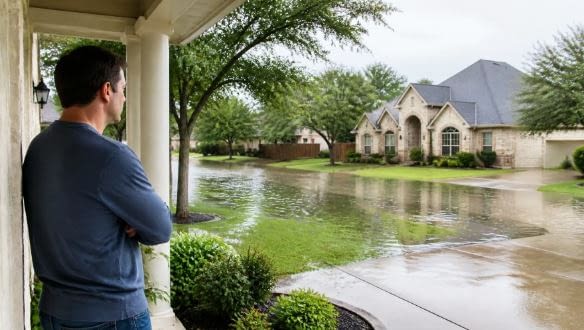
If a Texas storm sends water into your home, you may assume your homeowners insurance will pay for the damage. Unfortunately, the answer depends on where the water came from and how it entered your home.
The short answer: Standard homeowners insurance does not cover flooding
A standard homeowners policy generally does not cover damage caused by flooding or rising water. This includes water from:
- Flash floods
- Overflowing rivers, creeks, or drainage channels
- Storm surge
- Heavy rainfall that collects outside and enters your home
- Surface water that rises from the ground
To protect your home and belongings from these risks, you typically need a separate flood insurance policy through the National Flood Insurance Program (NFIP) or a private flood insurance carrier.
This is one of the most important distinctions for Texas homeowners: water damage is not always considered “flood” in insurance terms.
A sudden burst pipe inside your home may be covered by homeowners insurance. Water rising from the ground after heavy rain usually is not.
Your policy language controls the final answer, and coverage can vary by carrier. Still, the following examples can help you understand how insurers typically evaluate different types of water damage.
Is rising water covered by homeowners insurance?
Usually, no.
When water comes from outside your home and rises or accumulates on the ground, it is generally classified as flooding. Standard homeowners insurance policies exclude this type of loss.
Examples of rising water that usually requires flood insurance
- A creek overflows after several inches of rain.
- Stormwater fills your street and enters through your garage.
- Heavy rain causes water to pool against your foundation and enter the first floor.
- A flash flood moves rapidly through your neighborhood.
- Hurricane storm surge pushes seawater inland.
- A drainage channel or river overflows into your property.
Even if the flooding happens suddenly, it is still generally excluded from a standard homeowners policy.
Texas homeowners may face this risk even when they do not live near a large body of water. Flooding can occur in neighborhoods far from rivers, lakes, and the Gulf Coast, especially during intense rainfall. In fact, approximately 25% of NFIP claims come from low- to moderate-risk areas, showing why a “low-risk” designation does not mean “no risk.”
The Texas Department of Insurance explains that floods can happen anywhere in the state. This is particularly relevant in areas affected by Central and North Texas’s “Flash Flood Alley,” as well as coastal regions.
What about plumbing leaks or a burst pipe?
Plumbing leaks are different from flooding.
A standard homeowners policy will often cover sudden and accidental water damage caused by an interior plumbing problem, subject to your deductible, policy limits, exclusions, and the specific facts of the loss.
Example: burst washing machine hose
Suppose a washing machine hose suddenly breaks while you are away from home. Water damages the laundry room flooring, nearby drywall, and part of the hallway.
Because the water originated from an unexpected plumbing failure inside the house, your homeowners policy may cover the resulting damage. You would generally be responsible for your deductible, and the damaged appliance or hose itself may not be covered if it failed because of age or ordinary wear.
Other examples that may be covered include:
- A water heater suddenly ruptures.
- A supply line to a sink breaks.
- A pipe freezes and bursts.
- A bathtub or toilet unexpectedly overflows.
- An appliance malfunctions and releases water inside the home.
Policies may not cover a gradual leak that continued for weeks or months. They also may exclude damage caused by neglect, poor maintenance, repeated seepage, or mold, except in limited circumstances.

If you discover a plumbing leak, shut off the water if it is safe to do so, document the damage, and contact your insurance agent or carrier promptly. Avoid making permanent repairs before the insurer has had an opportunity to inspect the loss.
Does homeowners insurance cover roof leaks?
It may, if a covered event damaged the roof first.
Roof leaks are often evaluated based on why the roof allowed water to enter. If wind or hail damages your roof and rain enters through that newly damaged area, the resulting interior damage may be covered under your homeowners policy.
Example: wind-damaged roof
A severe thunderstorm lifts several shingles from your roof. During the next rainfall, water enters through the damaged section and stains the ceiling in your bedroom.
If wind is a covered peril under your policy and the damage is properly documented, your homeowners insurance may cover the covered portion of the roof damage and related interior repairs, subject to your deductible and policy terms.
However, a roof leak caused by age, deterioration, defective installation, or long-term wear and tear may not be covered.
Example: gradual roof deterioration
Your roof is 18 years old. Over time, the shingles become brittle, flashing deteriorates, and water slowly seeps into the attic during repeated rainstorms.
This type of gradual damage may be excluded. The policy may also not pay to replace a roof that simply reached the end of its useful life.
Texas homeowners should pay close attention to:
- The roof’s age and condition
- Wind and hail deductibles
- Whether the policy pays replacement cost or actual cash value
- Requirements for roof inspections
- Exclusions for cosmetic or maintenance-related damage
A roof inspection before storm season can help identify problems while they are still manageable.

Is sewer backup covered?
Usually not automatically.
Many homeowners policies do not include coverage for water or sewage that backs up through:
- A floor drain
- A toilet
- A shower
- A sump pump
- A sewer line
You may be able to add coverage through a water backup or sewer backup endorsement. This optional coverage can help with certain losses, but limits, deductibles, exclusions, and covered causes vary by insurer.
Example: backed-up sewer line
After heavy rain, a municipal sewer system becomes overwhelmed. Wastewater backs up through the floor drain in your basement and damages flooring, furniture, and stored belongings.
Without a sewer backup endorsement, your homeowners policy may not cover the damage. A flood policy may also have limitations, particularly if the backup is not directly caused by a qualifying flood.
Ask your agent specifically whether your policy includes:
- Sewer backup coverage
- Sump pump overflow coverage
- A separate deductible
- Coverage for cleanup and removal
- Coverage for personal property
- Coverage for basement improvements
Adding an endorsement may be less expensive than paying for a major cleanup entirely out of pocket.
Is flash flooding covered by homeowners insurance?
No: flash flooding is generally still considered flood damage.
The speed of the water does not change how insurers classify it. If heavy rain causes water to flow across the ground, rise into your home, or enter through doors, garages, windows, or foundation openings, it is generally considered flooding.
Example: flash flood after severe rainfall
A storm drops several inches of rain in a short period. Water rushes down the street, enters your garage, and spreads into the first floor of your home.
Even though the event lasted only a few minutes, the damage would generally require flood insurance rather than homeowners insurance.
That is why waiting until a storm is approaching can be risky. NFIP policies commonly have a 30-day waiting period, although exceptions may apply in specific situations. Private flood policies may have different waiting periods and conditions.
You can learn more about flood policies, waiting periods, and coverage options through the Texas Department of Insurance and FloodSmart.gov.
What does flood insurance cover?
Flood insurance is designed to cover damage from qualifying flood events, including certain rising-water and surface-water losses.
Depending on the policy, coverage may be available for:
- The home’s foundation and structural components
- Electrical and plumbing systems
- HVAC equipment
- Built-in appliances
- Flooring and cabinets
- Personal belongings, if contents coverage is included
NFIP policies generally provide up to $250,000 in building coverage and up to $100,000 in contents coverage, subject to policy terms and limits. Private flood policies may offer different limits or additional features.
Do not assume that flood insurance covers every item in a basement or pays for every expense. Coverage for temporary housing, landscaping, vehicles, valuables, and certain below-grade property can be limited or excluded.
Review the policy before you need it.
What should Texas homeowners do now?
A practical coverage review can help prevent an unpleasant surprise after the next storm.
1. Check your flood risk
Look up your property’s flood zone, but do not rely on the zone alone. Flooding can occur outside designated high-risk areas.
2. Ask about separate flood insurance
Request quotes for both NFIP and private flood insurance when available. Compare limits, deductibles, waiting periods, exclusions, and coverage for the building and contents.
3. Add sewer backup coverage
Ask whether your homeowners policy offers a sewer and drain backup endorsement and whether sump pump overflow is included.
4. Review your roof coverage
Confirm your roof’s age, wind and hail deductible, valuation method, and any inspection or maintenance requirements.
5. Document your home and belongings
Take photos or video of every room, closet, garage, and storage area. Keep receipts and a home inventory in a secure cloud account or another location away from the property.
6. Know what to do after water damage
If a storm causes damage:
- Protect people and avoid unsafe electrical areas.
- Stop the water source if possible.
- Photograph and video the damage before cleanup.
- Make only temporary repairs to prevent further damage.
- Keep receipts for emergency materials and services.
- Notify your insurance carrier or agent promptly.
- Do not discard damaged property until the insurer advises you, unless it presents a health or safety hazard.
Let Trutela review your water-damage protection
Flooding, plumbing leaks, roof leaks, and sewer backups can look similar, but they may be handled by completely different parts of your insurance program.
Trutela is an independent insurance agency that shops coverage through 50+ insurance carriers, including options for homeowners, flood insurance, and related property risks. Rather than representing only one insurance company, we can compare available solutions based on your home, location, deductible preferences, and risk concerns.
Our agency is managed by Joseph Gutierrez, CIC, who brings more than 25 years of insurance experience to the coverage review process.
Before the next Texas storm, let us help you identify what is covered, what is excluded, and where a separate policy or endorsement may be appropriate.
Call (210) 757-4520 or visit www.trutela.com to discuss your options. You can also learn more about our team by visiting Joseph Gutierrez’s profile and review the insurance carriers Trutela works with.